
Workshop
Glasswork
Cam İşçiliği
Bespoke glasswork craftsmanship refers to the art of handmade glass and architectural production processes that are custom-designed for a specific individual or project, moving beyond standard dimensions and mass-production molds.
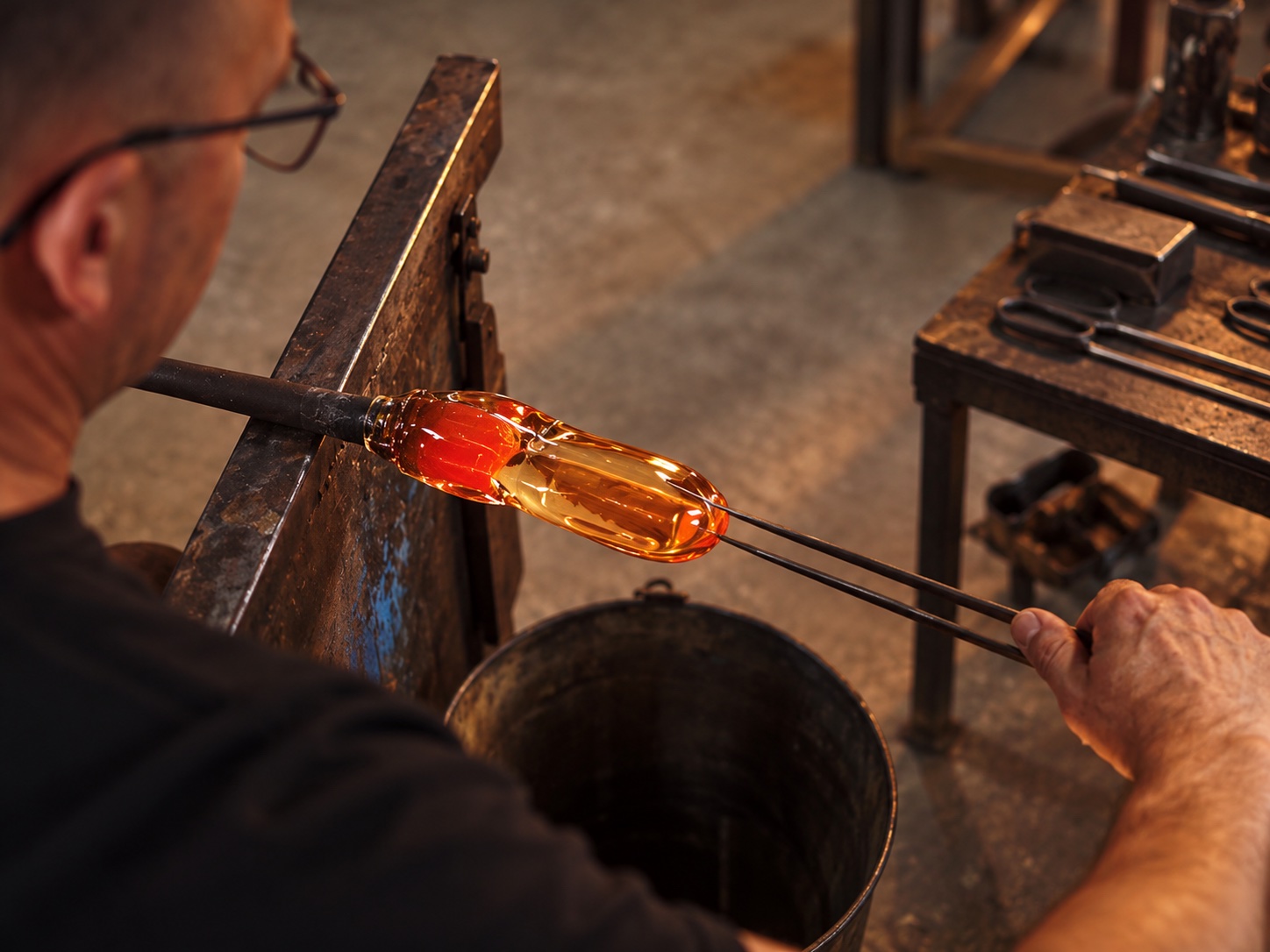
Key Features and Production Methods
• Bespoke Design for Individuals and Spaces: Products are crafted to precise dimensions, forms, and technical specifications tailored for architectural projects, interior spaces, lighting designs, or works of art.
• Hot Glass Techniques: These include traditional shaping processes such as mouth-blowing, forming on a marver, casting into molds, and heating glass within a "glory hole" (reheating furnace).
• Cold and Intermediate Glass Techniques: These encompass manual cutting, stained glass, copper foil work, sandblasting, grinding, engraving, fusing (joining glass through heat), as well as lamination and tempering.
• Tangible Cultural Heritage: Handcrafted glass production is recognized by UNESCO as a craft tradition—included on the list of intangible cultural heritage—that requires specialized mastery and is passed down from generation to generation.
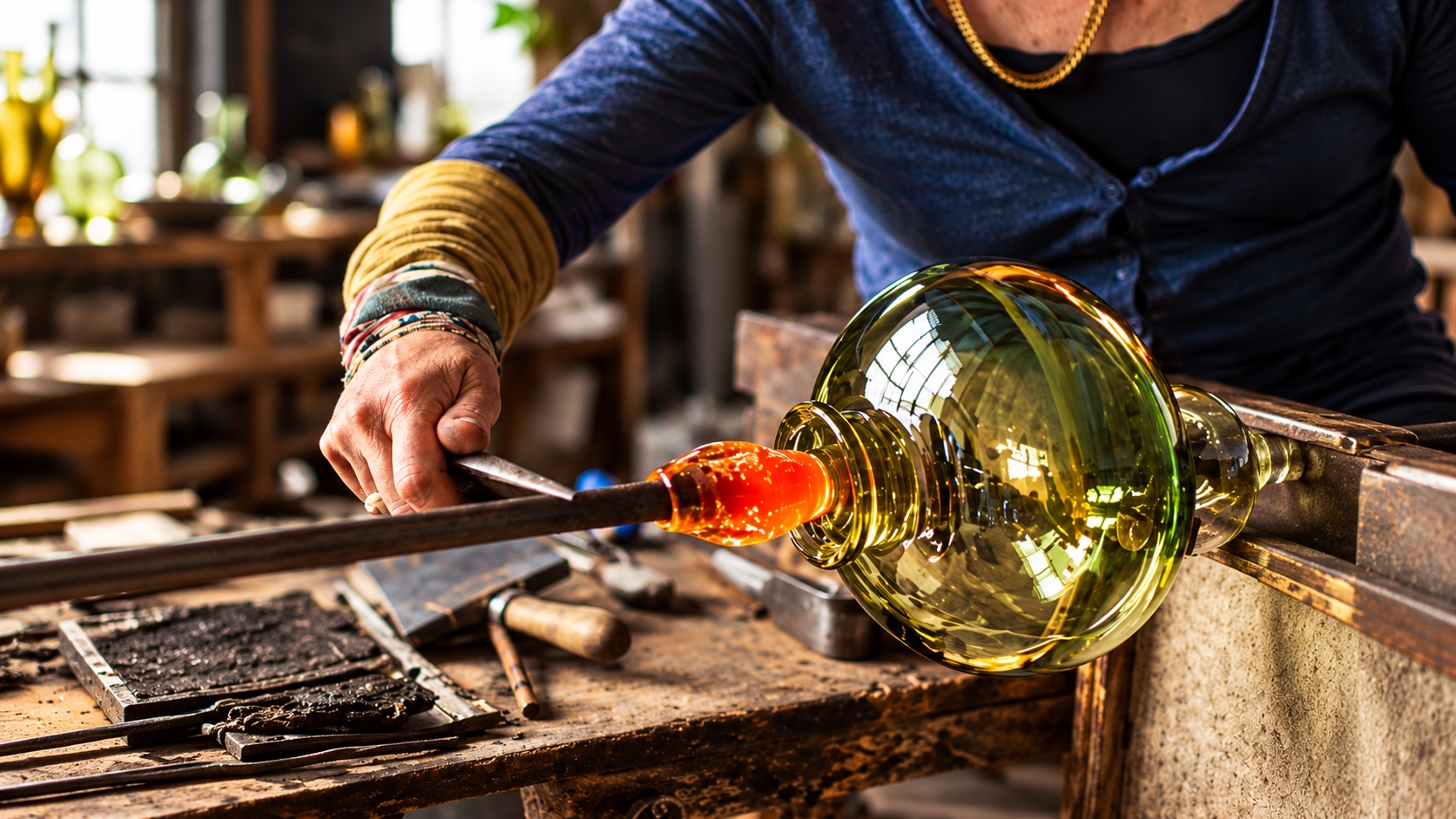
Cold and Fused Glass—as opposed to hot-glass blowing techniques, which involve shaping molten, liquid glass—is a high-level craft discipline that relies on millimeter-level precision and an understanding of thermal dynamics; it requires managing the physical boundaries of the material in its solid state, as well as the molecular movements that occur within a kiln.
The combination of these two disciplines allows for both the mechanical carving of the glass and its transformation into a single, unified body through the application of controlled heat.
The copper foil technique (known globally as the Tiffany Technique) is a stained-glass production method developed by Louis Comfort Tiffany in the late 19th century; instead of using traditional, thick lead cames, it involves wrapping the edges of each individual piece of glass in flexible, adhesive copper strips and then soldering them together.
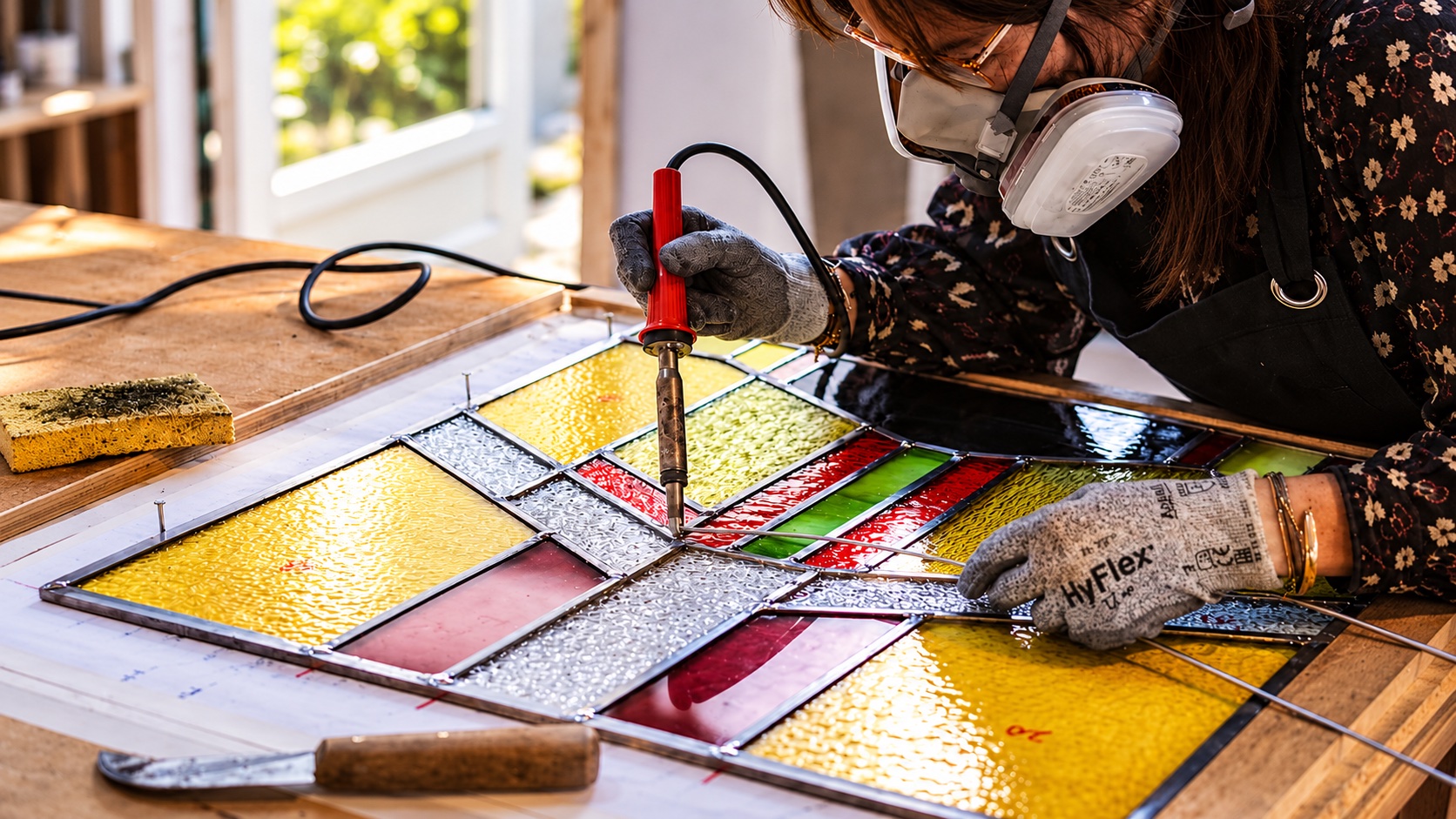
Stained glass is a craft in which pieces of colored glass are joined together using lead strips to create walls, windows, or panels that allow light to pass through. Throughout history, this art form—closely linked to religion, architecture, and the theology of light—requires both a complex understanding of chemistry and a high level of manual skill.
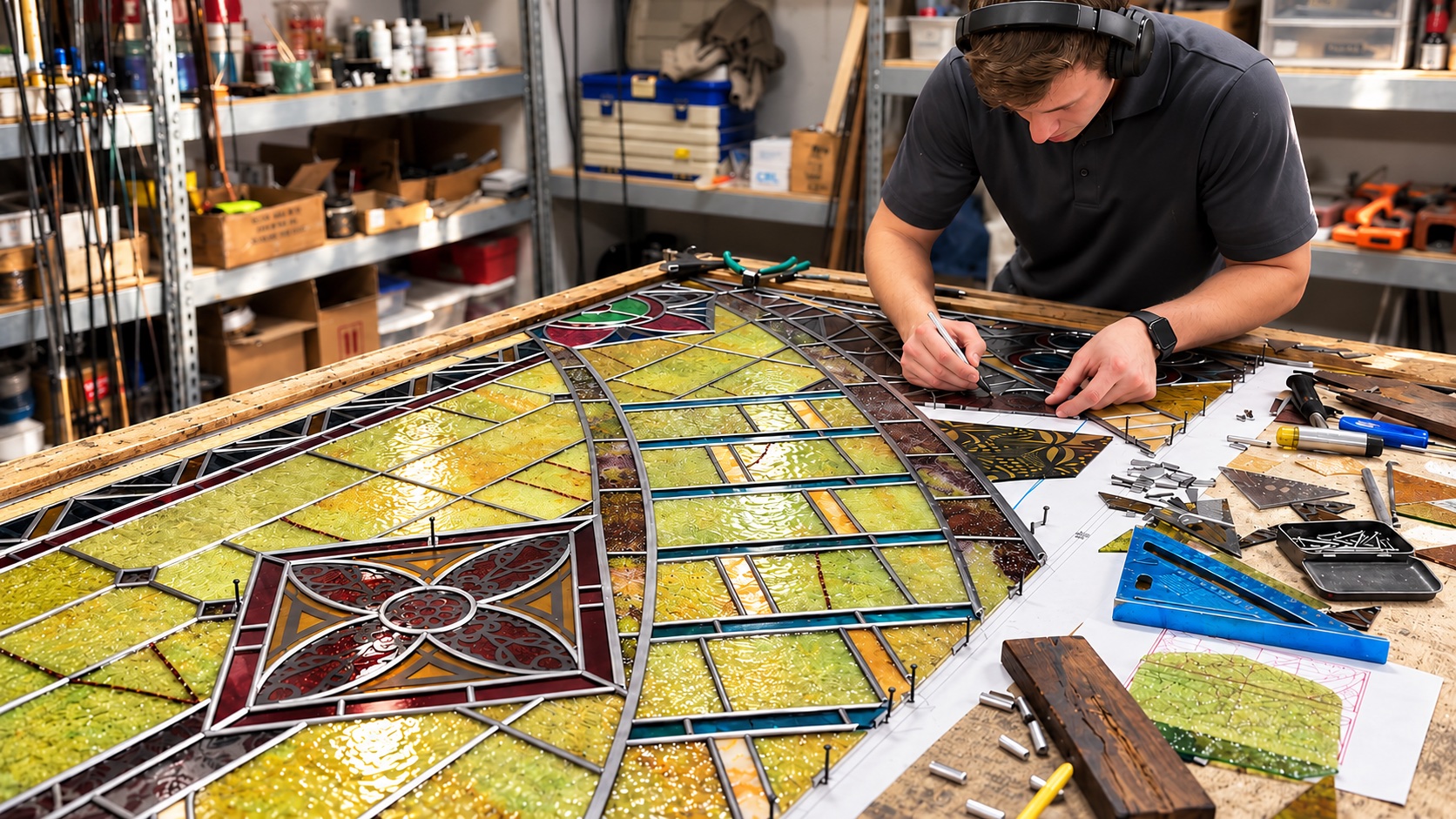
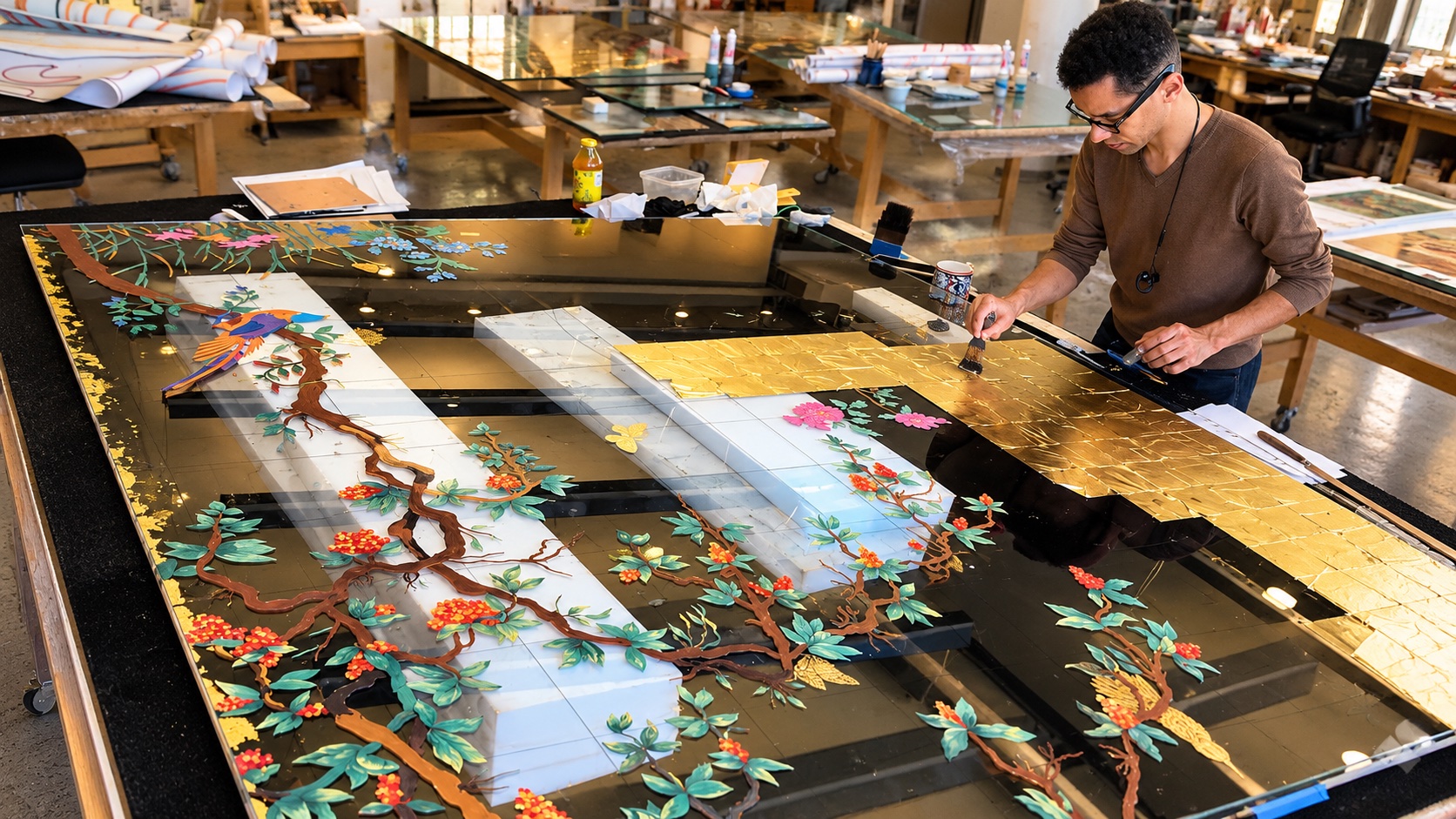
Stained Glass: Technical Infrastructure and Craftsmanship
1. Sketch and Cartoon (Maquette & Cartoon)
• First, a scaled design (sketch) is prepared.
• Next, a full-scale technical drawing, known as a "cartoon," is produced.
• On this cartoon, the color for each piece of glass is determined, and the lines (allowances) where the lead cames will be placed are drawn with millimeter precision. Using specialized double-bladed pattern shears, the paper is cut away to account for the space the lead will occupy.
2. Glass Selection and Cutting
• Depending on the design, antique glass, cathedral glass, or opalescent glass is selected.
• The artisan uses a diamond-tipped glass cutter to cut the glass, following the templates. For curved lines, any rough edges remaining after cutting are trimmed away using grozing pliers.
3. Painting and Firing (Grisaille Technique)
• In classic stained glass, details such as facial expressions, folds in clothing, or shadows are applied to the glass using a special paint called "Grisaille"—a mixture of iron oxide and finely ground glass powder.
• The painted glass pieces are then fired in a kiln at temperatures between approximately 600°C and 650°C. At this temperature, the paint melts into the surface of the glass, becoming permanently fused with it.
4. Leading and Soldering
• The cut and painted pieces are individually fitted into the channels of soft, H-profile lead strips (cames).
• Once all components have been assembled and compressed, the joints of the lead cames are fused together using a soldering iron and a 60/40 tin-lead alloy solder. To ensure the structural integrity of the panel, soldering is applied to both the front and back surfaces.
5. Cementing (Waterproofing)
• To prevent the glass pieces from rattling when the stained glass panel is positioned upright, to ensure it can withstand wind pressure, and to make it watertight, a specialized stained glass putty—composed of chalk powder, linseed oil, and drying agents—is worked into the gaps between the lead cames and the glass using brushes.
• Following the cleaning process, the panel is left to "mature" (cure) until it reaches the necessary strength for installation into the structure.