
Workshop
Woodwork
Ahşap İşçiliği
Bespoke products, from the raw timber to the final piece.
In the woodworking workshops, every stage—from the selection of raw timber and the drying process to final assembly and the last finishing touches—is carried out under one roof. Master carpenters work alongside CNC routers and panel-sizing machines to produce furniture, wooden panels, cabinetry systems, and architectural woodwork.
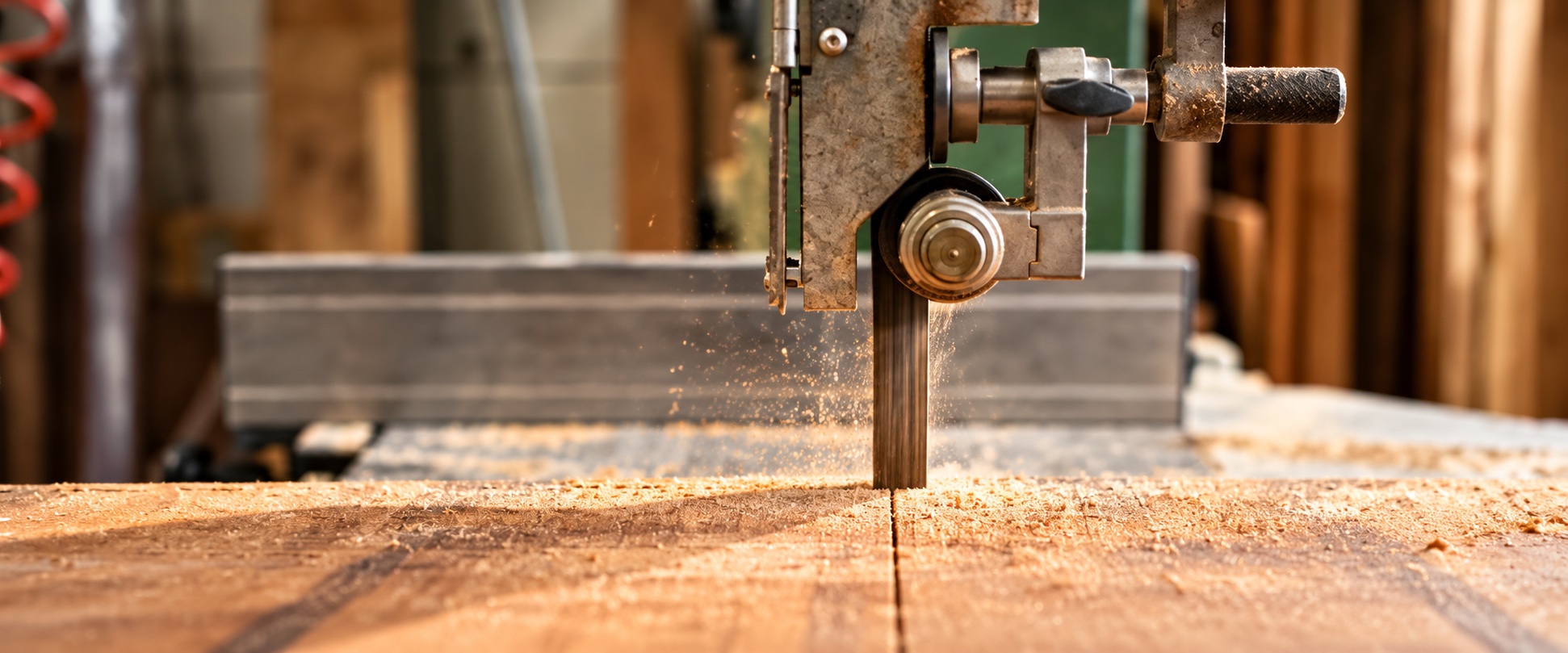
Wood species are chosen according to their intended use. European hardwoods, including oak, walnut and ash, are suitable for most furniture and cabinetry. Tropical species such as iroko and teak are specified for settings exposed to moisture or humidity, including bathrooms, exterior joinery and spaces beside water features. Engineered boards offer dimensional stability in applications where the natural movement of timber could pose a problem. The workshop also carries out hand carving for relief panels, furniture detailing and custom decorative features.
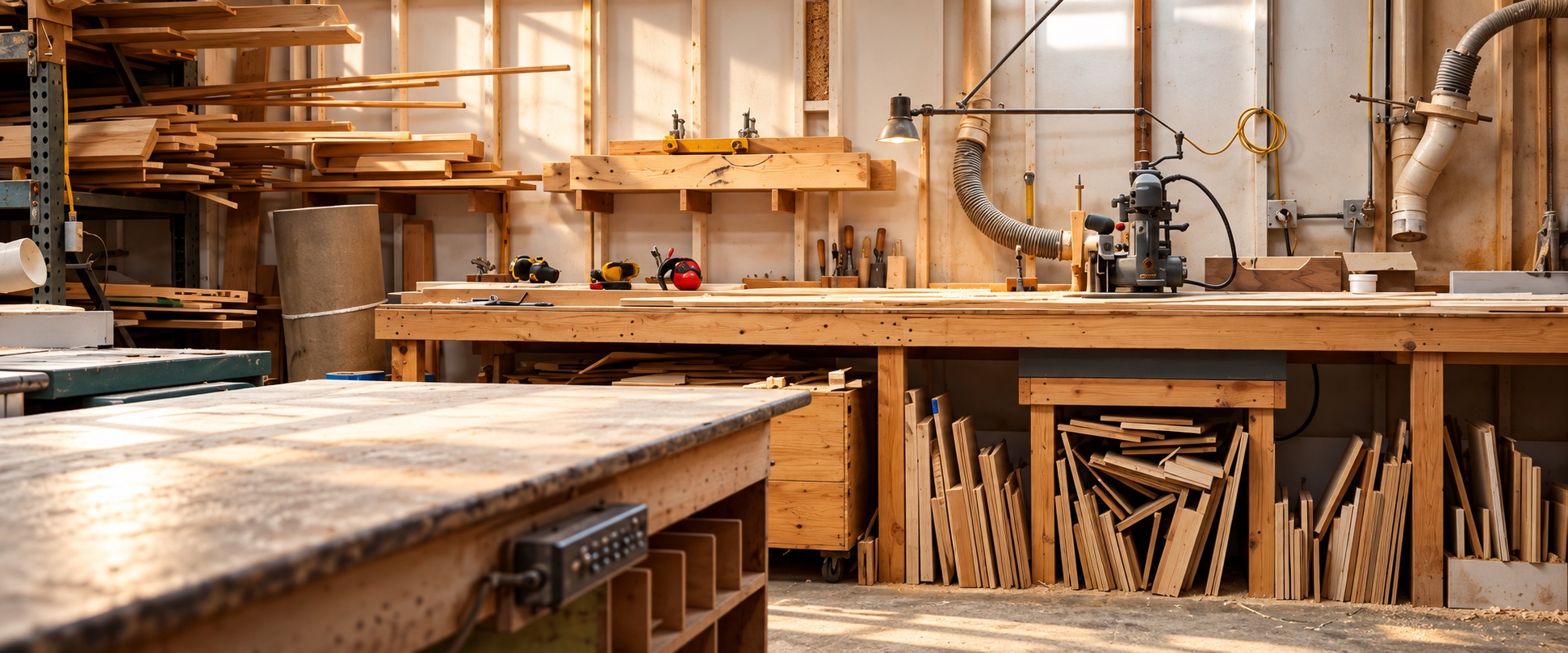
The wood store holds timber from European oak and American walnut to hand-selected exotics, alongside the full Tabu veneer collection. Veneering is carried out in-house on flat and curved substrates. The range of species available is broad by design — a single commission may draw on several.
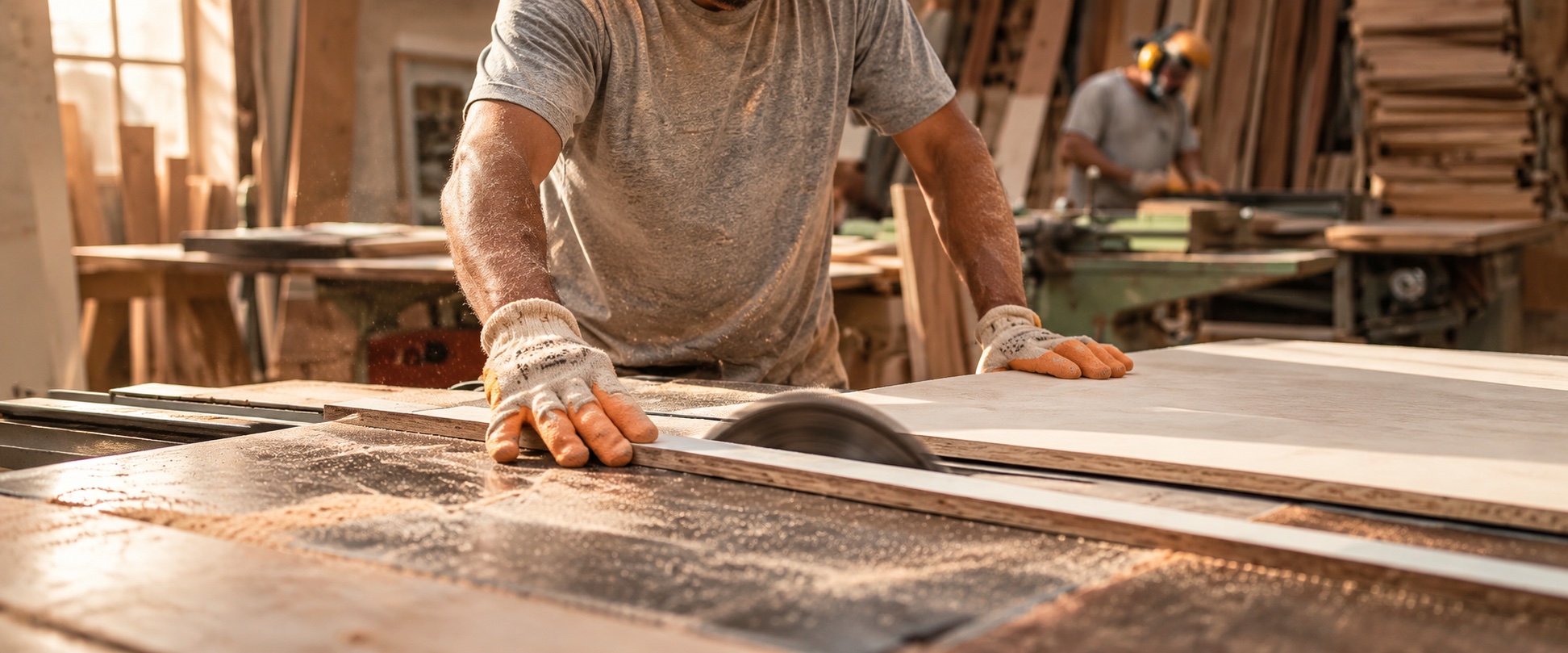
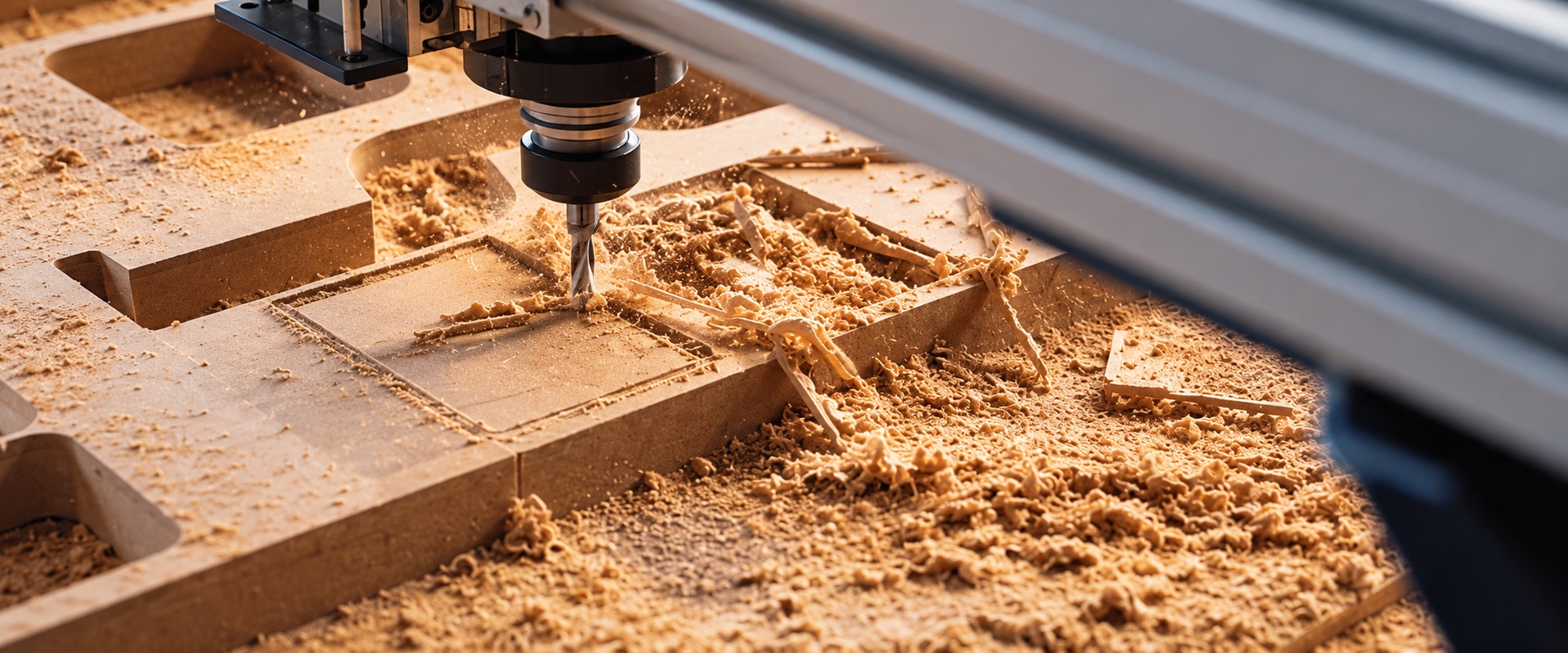
CNC routers produce panel profiles, rebates, mortices and decorative surface details with consistent precision across all components in a production run, eliminating the variation that can arise from hand routing at scale. Panel saws cut sheet materials and solid timber to working sizes. Thicknessing and planing then create flat, square and parallel faces before joinery starts.
All finishing is carried out in-house, including oiling, hardwax oil application, lacquering and staining. Each process starts with progressively finer sanding to prepare a clean substrate. Oil finishes are built up in coats, with sanding between applications, while lacquer is sprayed in the booth to achieve a uniform surface where required. Stains are applied in layers until the specified depth of colour is reached, followed by a protective topcoat. Every piece undergoes a final inspection and any necessary corrections before leaving the workshop.