Products Design
Objects that started on site.
Furniture, lighting and objects developed out of details, materials and offcuts from our architecture and interiors work — not designed separately from it.
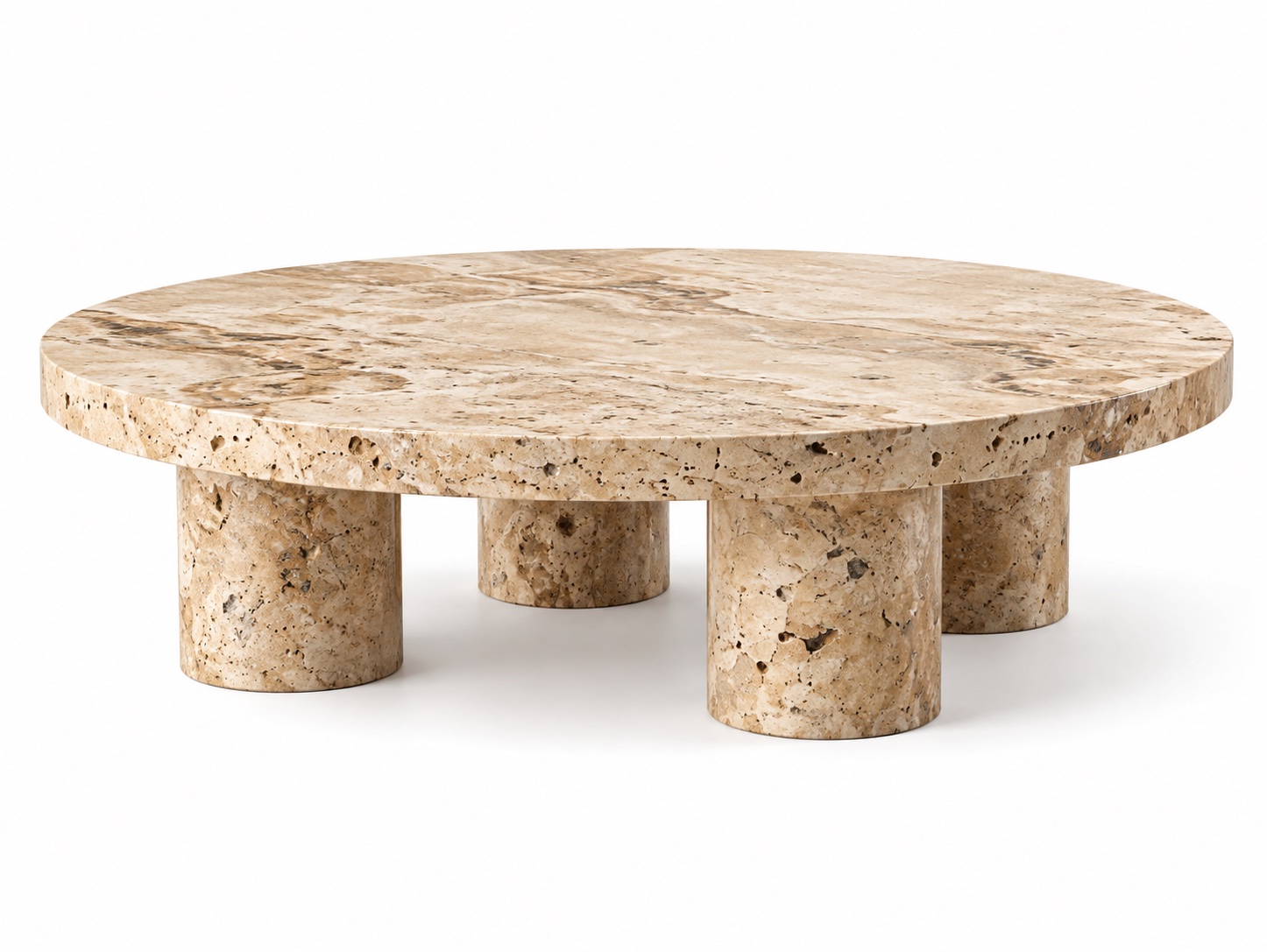
Furniture · 2023
Kesit Side Table
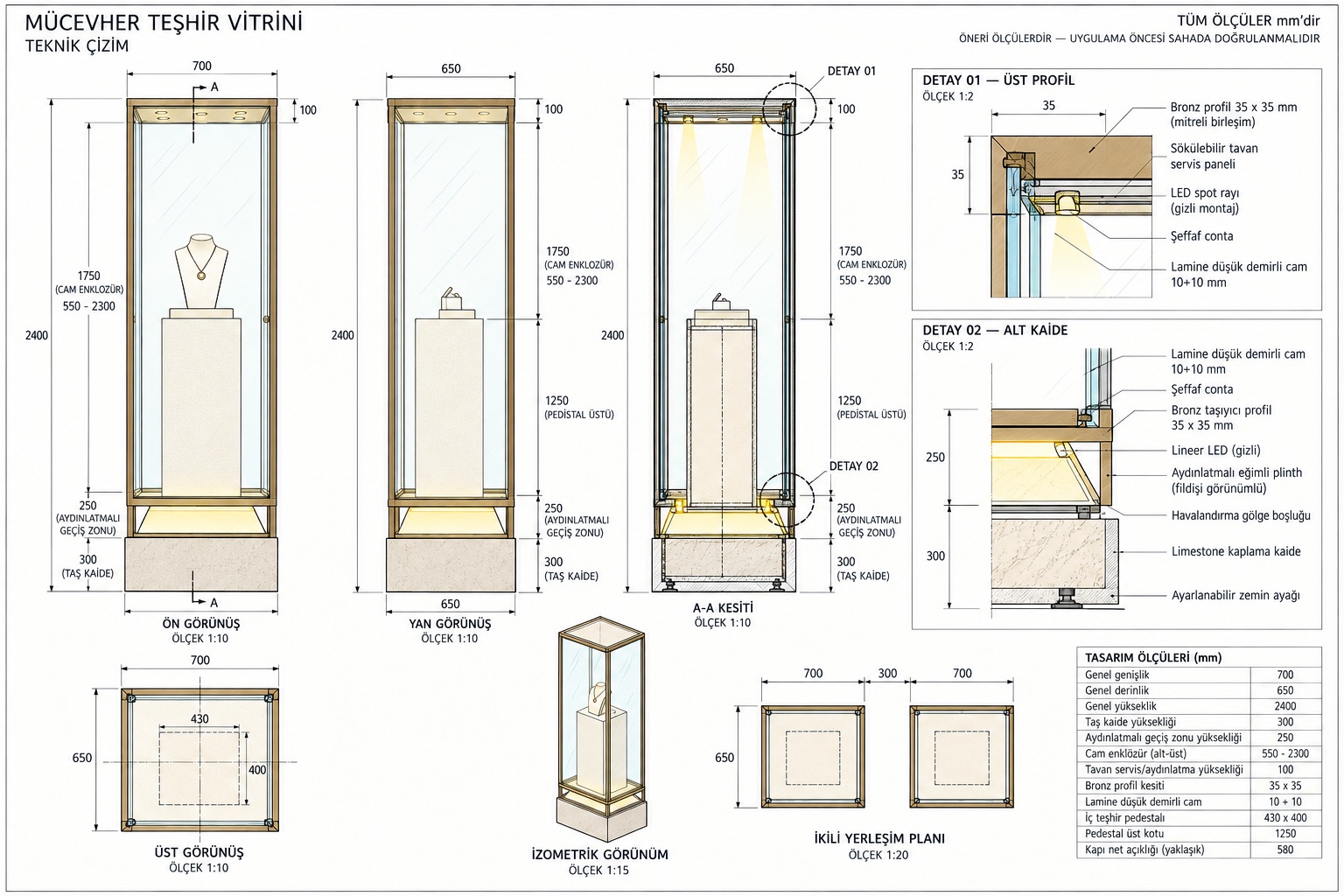
Lighting · 2022
Contour Pendant
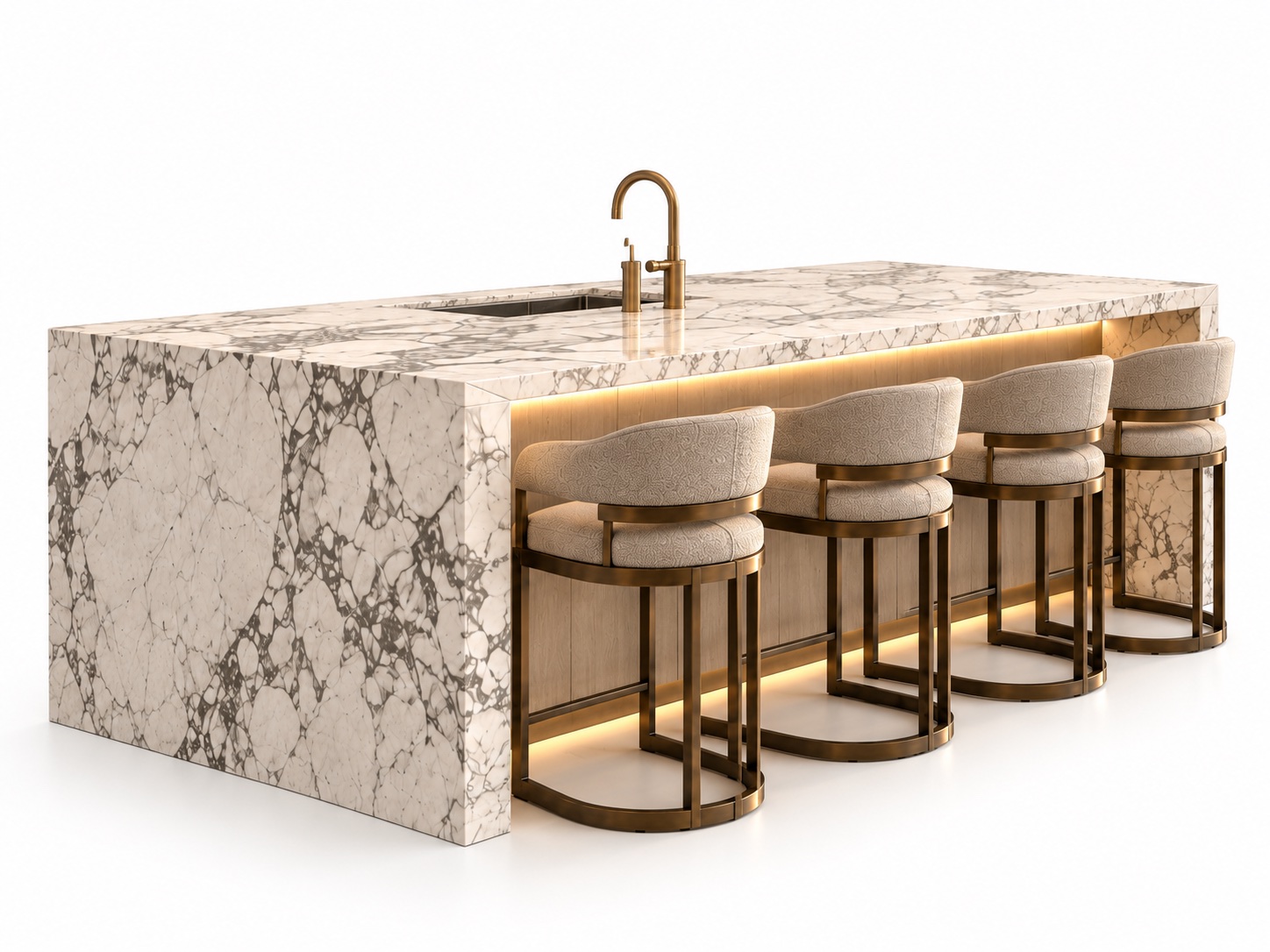
Furniture · 2024
Waterfall Marble Kitchen Island
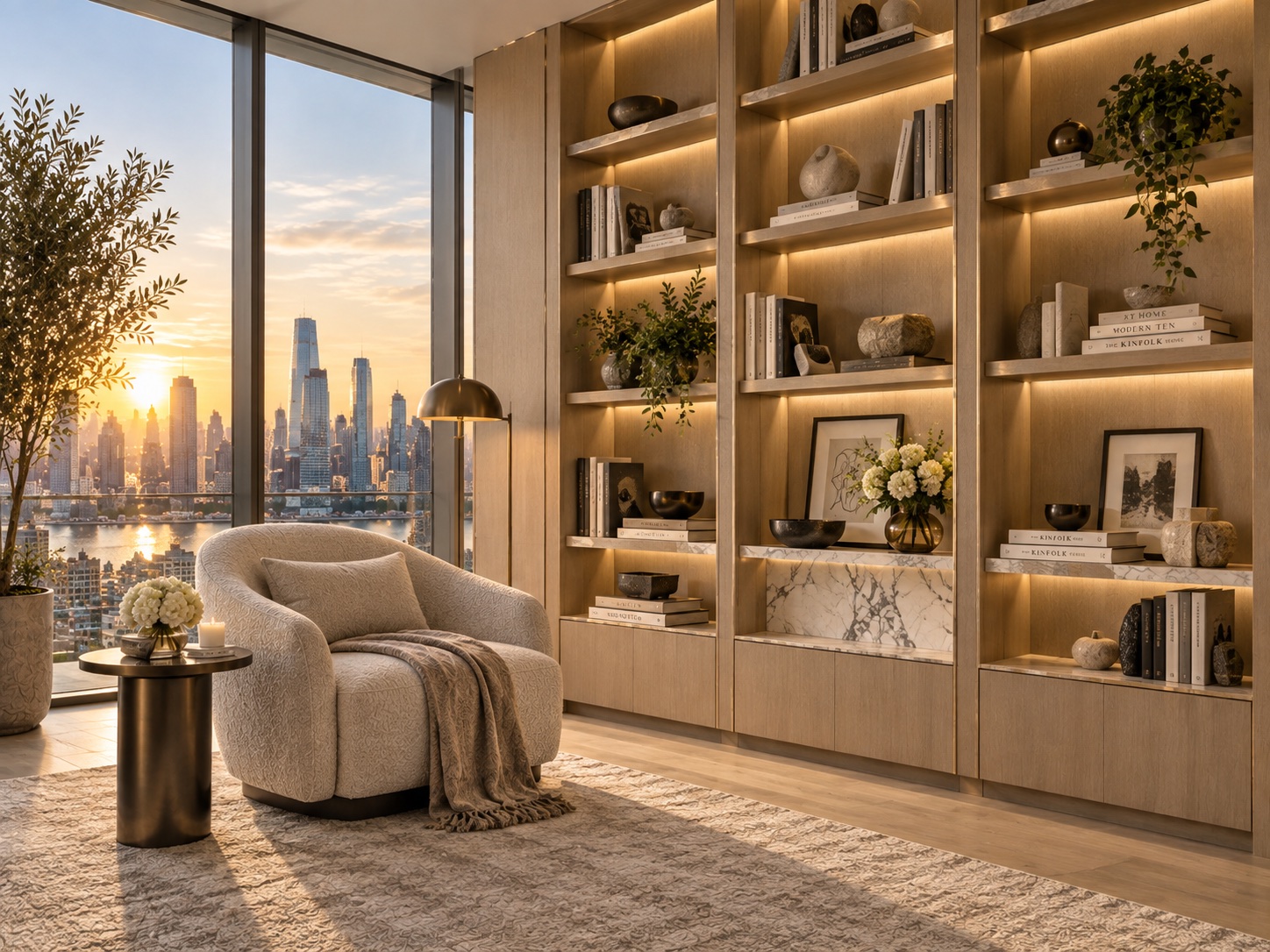
Furniture · 2024
Modular Joinery Shelving
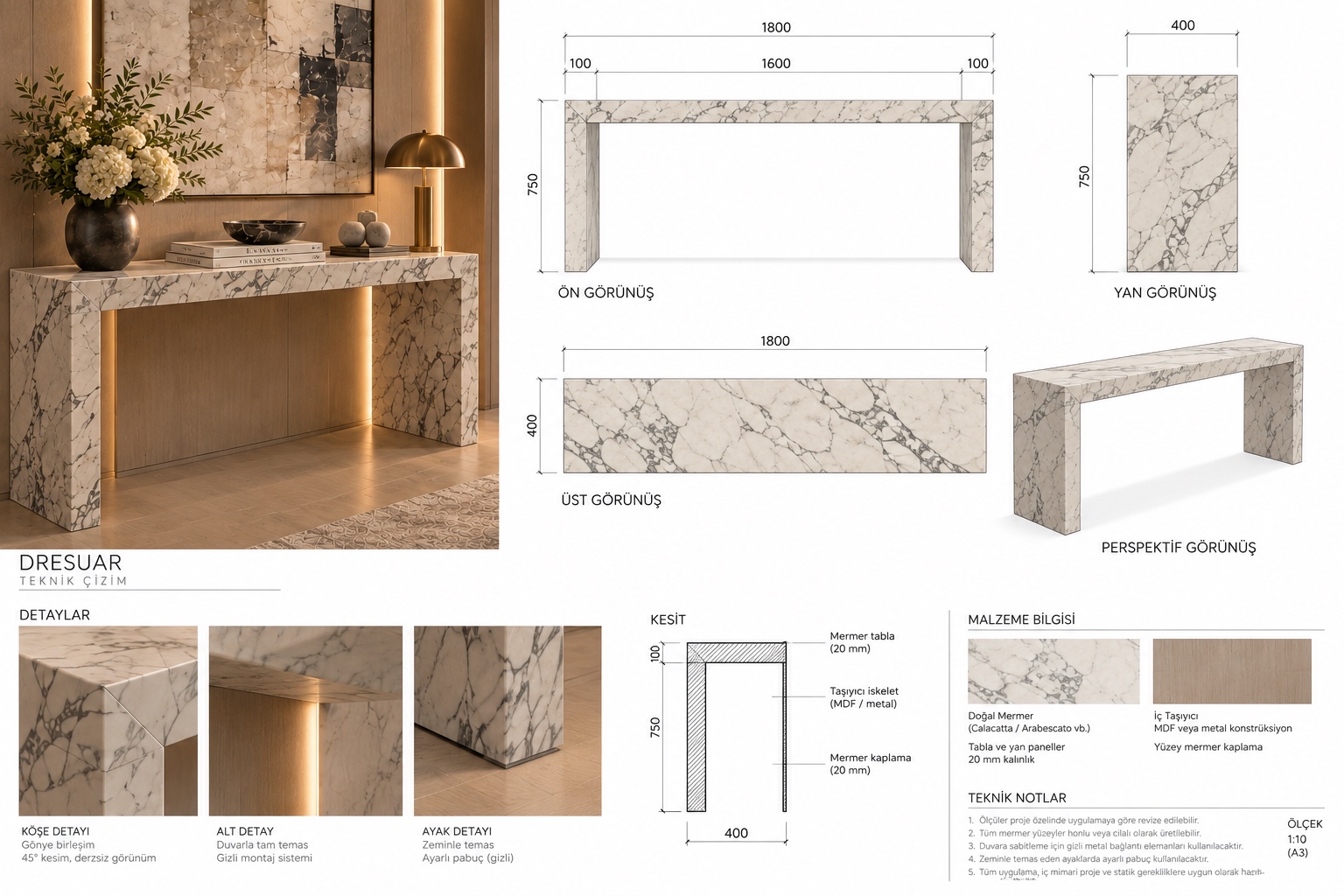
Furniture · 2025
Marble Console
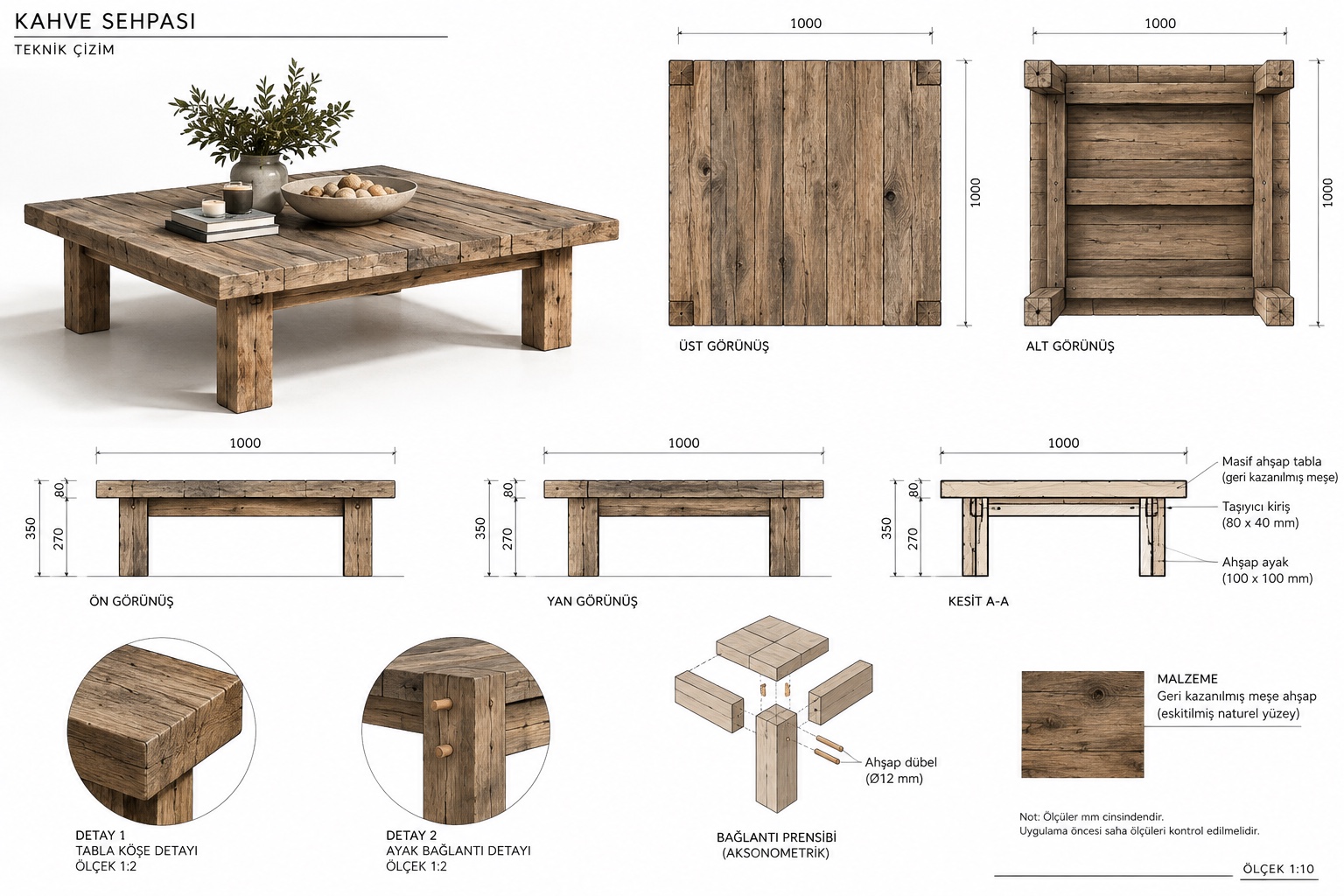
Furniture · 2024
Reclaimed Oak Coffee Table
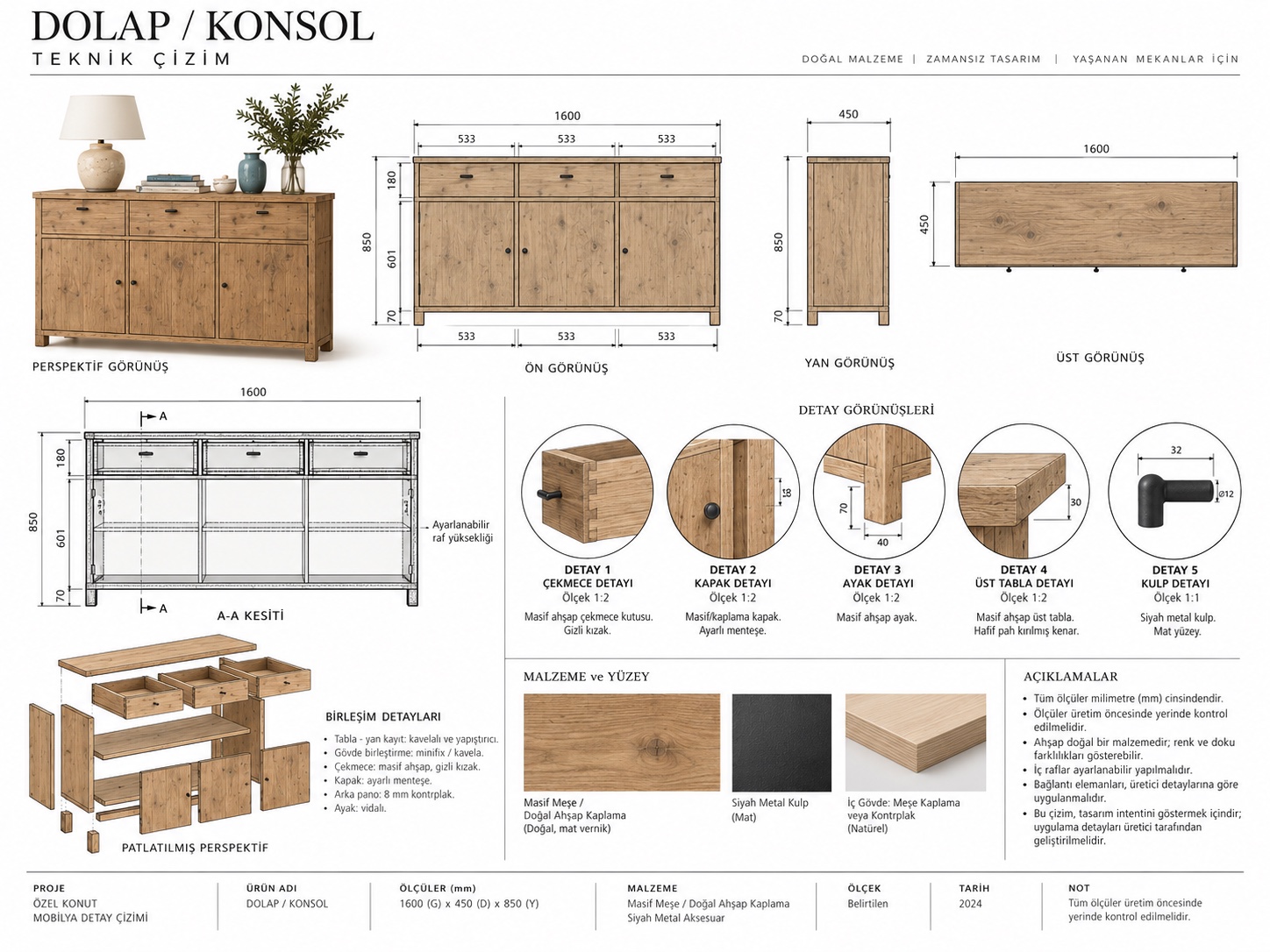
Furniture · 2024
Oak Console Cabinet
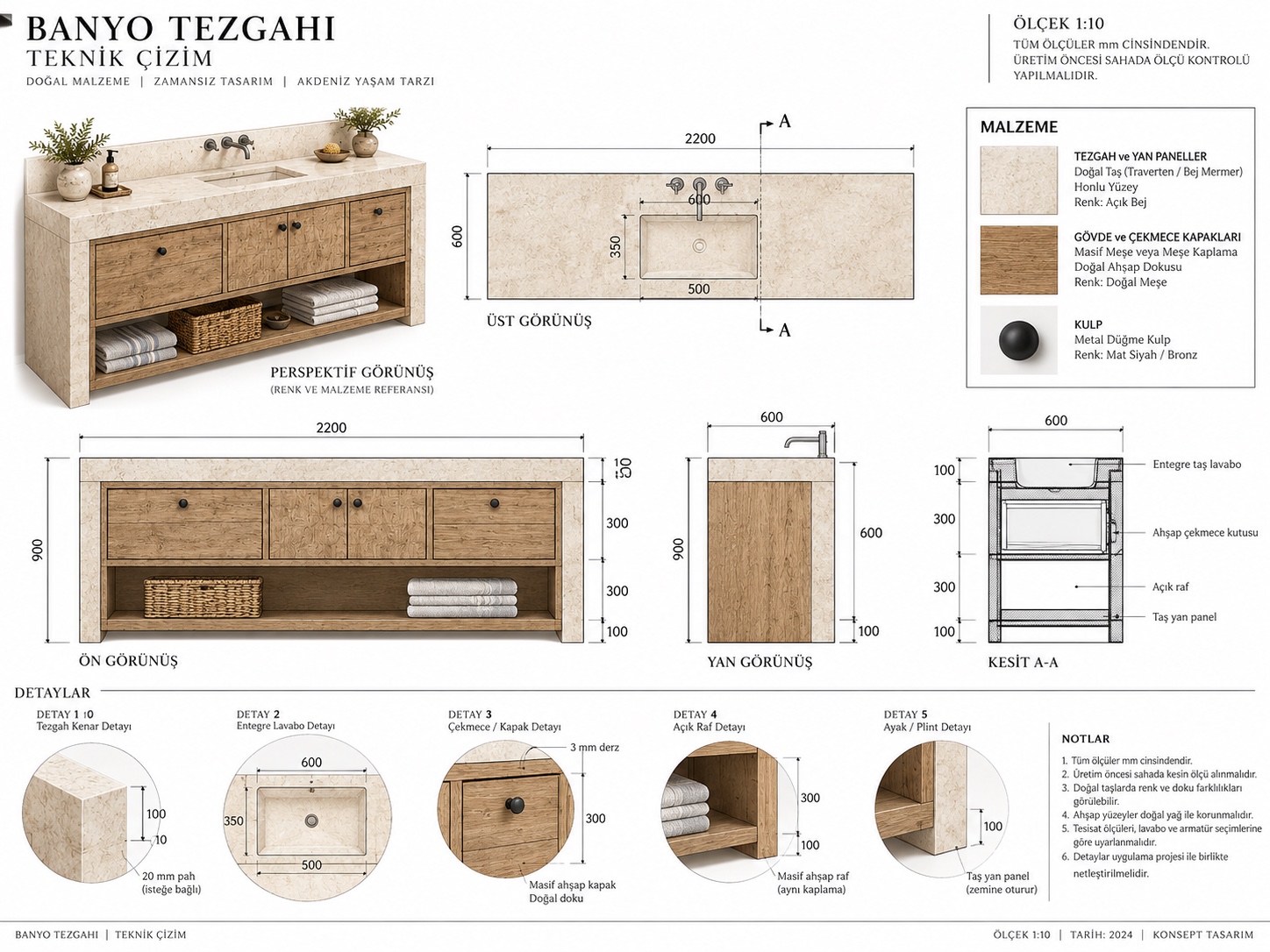
Furniture · 2024
Mediterranean Stone Bathroom Vanity
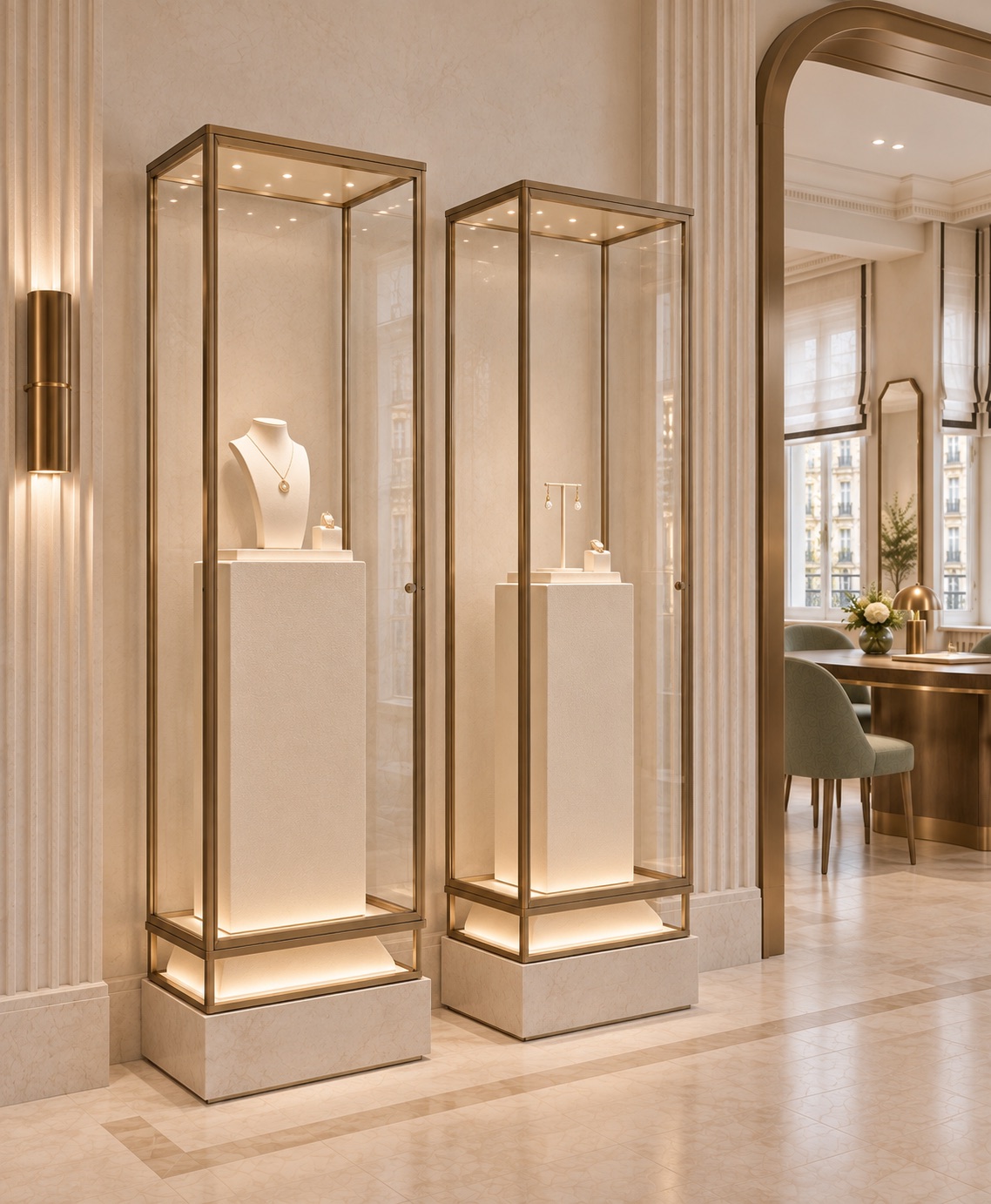
Furniture · 2025
Oval Jewelry Display Case
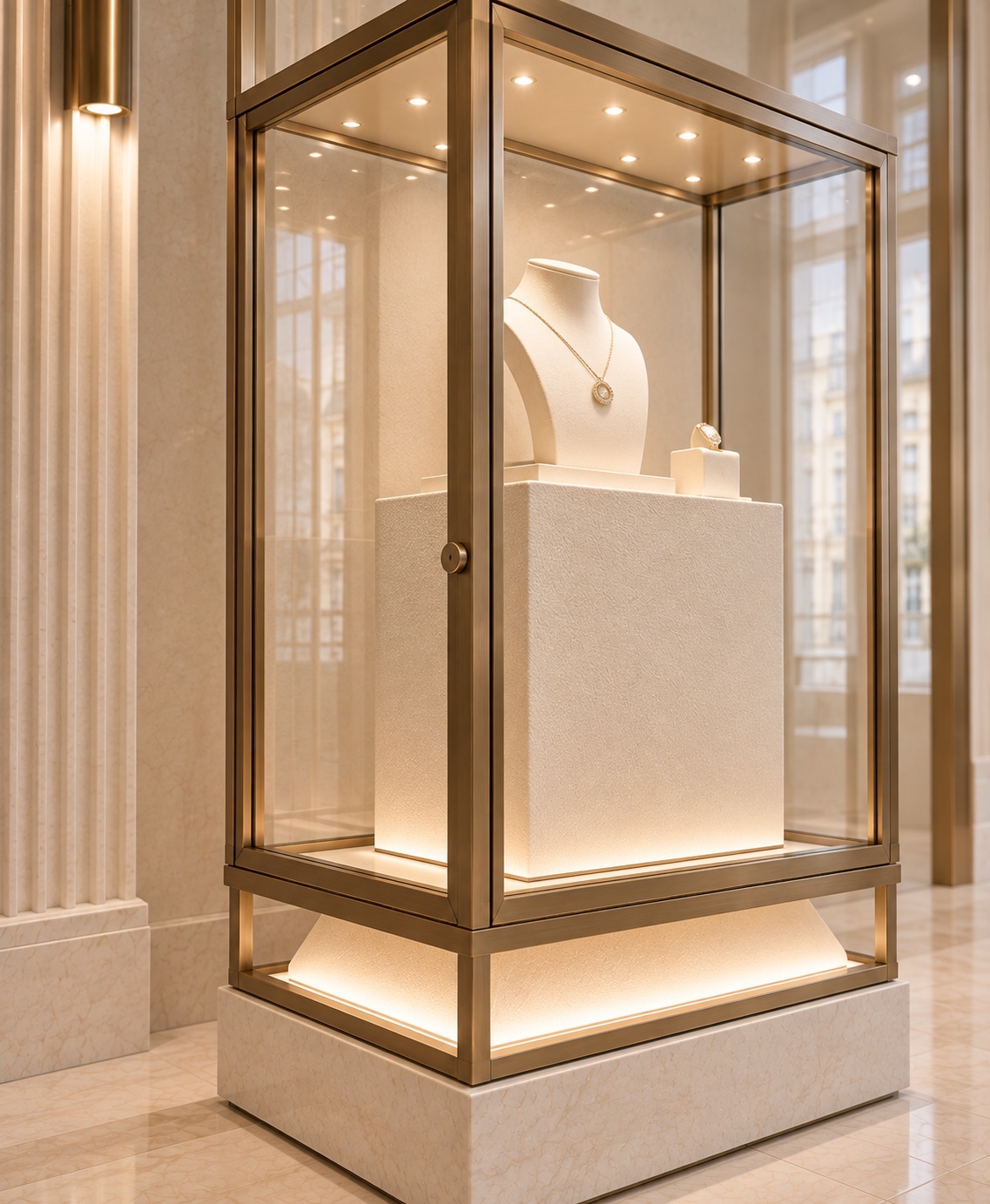
Furniture · 2025
Illuminated Wall Showcase
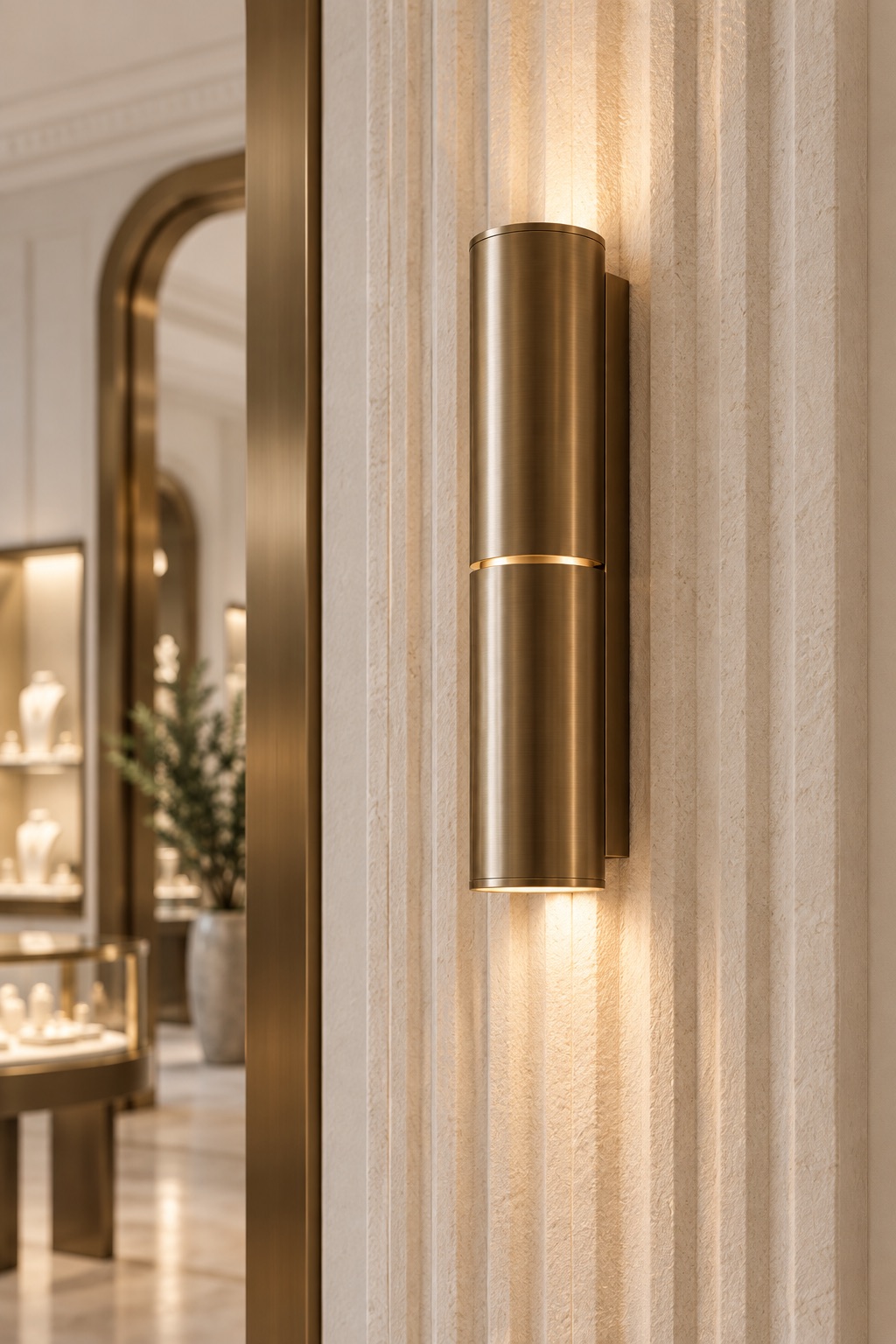
Lighting · 2025
Bi-Directional Bronze Wall Sconce
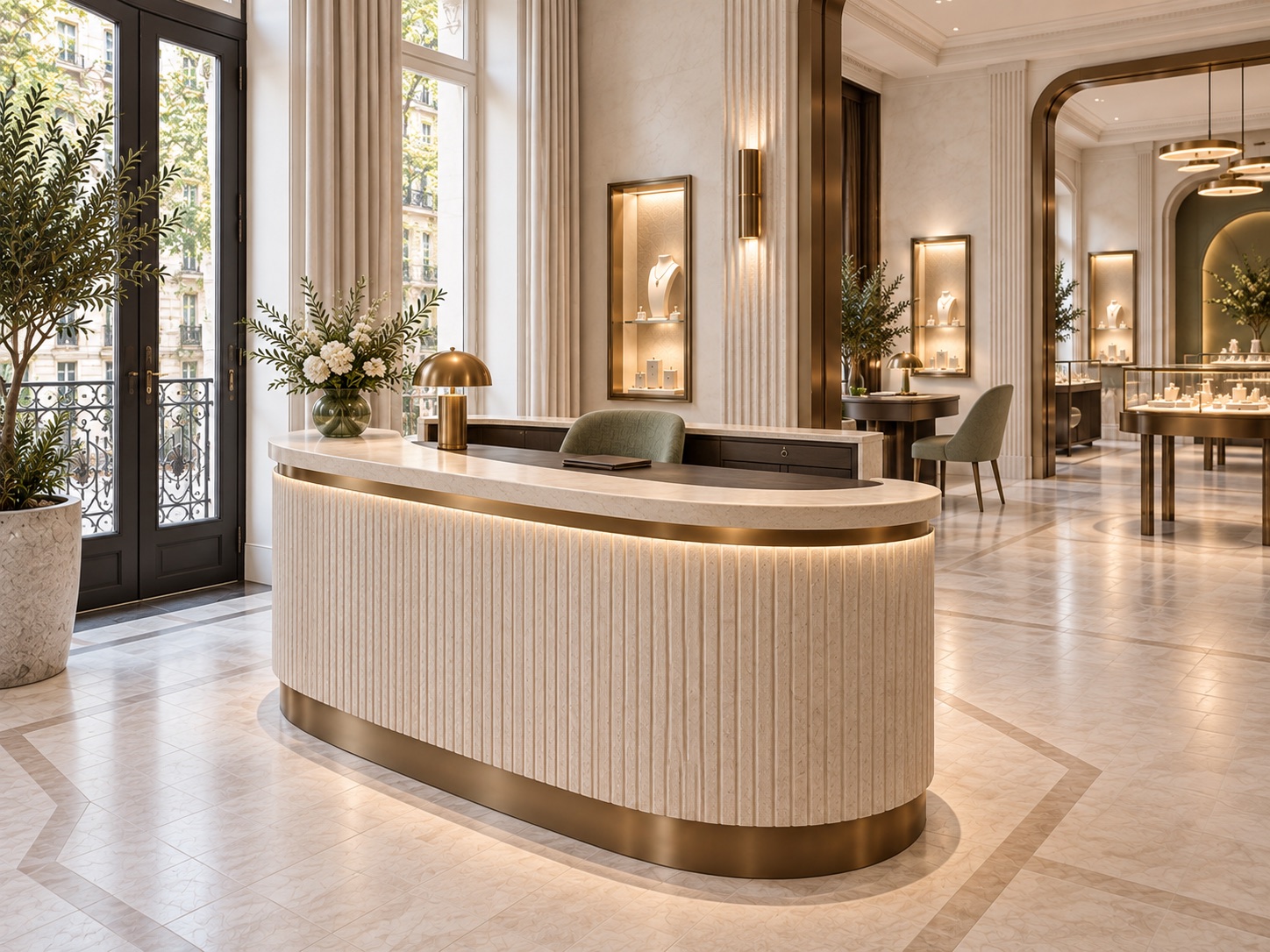
Furniture · 2025
Boutique Reception Desk
Notes on memory
An object is not merely something to be used. Over time, a person forms a relationship with the objects they touch, carry, keep, and use repeatedly in their daily life. A chair, table, pen, watch, or cup may initially be nothing more than a functional product. Yet, through use, it becomes scratched, worn, and altered in form, beginning to bear traces of its owner's life. Thus, the object ceases to be a mere physical tool and transforms into a part of lived experience.
This relationship is one of the most significant—yet often overlooked—aspects of product design. A product's value lies not only in its form, ergonomics, or manufacturing quality, but also in the bond it can forge with a person over time. We do not use certain objects for years simply because they are technically superior; rather, those objects have aged alongside us, become part of specific moments, and embedded themselves in our personal histories.
In contrast, an increasing number of products today are designed to be "memory-less." Instead of fostering a long-term relationship with the user, these products are built on rapid consumption, easy replacement, and constant renewal. Their surfaces are flawless—designed to conceal any signs of use—and when they break, they are replaced rather than repaired. A few years later, a new model of the same product hits the market, and the old one rapidly loses its value.
"Memory-less" product design implies more than just the creation of short-lived goods; at a deeper level, it represents a design philosophy that precludes the product from evolving over time or being personalized by the user. Traces left by the user are viewed as flaws; scratches, discoloration, wear, and repairs are all deemed factors that diminish the product's value. Yet, these traces are the very layers that constitute the object's history. Scratches on the surface of an old wooden table, the altered shape of a leather armchair used for years, or the patina that develops on a metal object over time—all make the time the object has lived through visible. As each of these products undergoes physical change, it simultaneously keeps a record of its relationship with the user. In other words, the object carries memory within its very material.
A product devoid of memory, however, seeks to remain as free of a past as possible. It is designed to be independent of the user, perpetually new, and interchangeable. Consequently, the user struggles to form a strong bond with the object. Even if the loss of a broken or worn-out product entails more than just the loss of a functional tool, replacing it with a new one is incredibly easy.
Perhaps one of the key questions for the future of product design is this: Can an object age alongside a human being? Can a designer envision not only the product's appearance on day one but also its state ten years down the line?
Viewed in this light, product design is not merely about shaping an object; it is about designing the relationship that object will forge with time. A product with memory does not attempt to conceal its past. It embraces usage, undergoes transformation, and bears the traces of a person's life. For the true value of certain objects emerges not at the moment of their creation, but over the course of the time they live.